Control cabinet Internal Fan
Control cabinet internal fans ensure targeted air circulation within the control cabinet and promote uniform temperature distribution. While filter fans draw fresh ambient air into the control cabinet, internal fans operate within the enclosed cabinet and reliably distribute the existing air throughout all components. This reduces hot spots, balances temperature differences, and extends the service life of sensitive electronics.
Especially in control cabinets with high component density or uneven heat generation, control cabinet internal fans contribute significantly to stable system operation. They improve the cooling performance of existing air conditioning systems and ensure that even hard-to-reach areas are reliably ventilated.
Why an internal control cabinet fan is useful
Electronic components generate varying amounts of heat during operation. Without targeted air circulation, local hotspots can develop, placing unnecessary strain on individual components. An internal control cabinet fan distributes the heated air evenly throughout the entire enclosure and supports natural heat exchange.
The benefits at a glance:
- Even temperature distribution within the control cabinet
- Reduction of heat pockets and hotspots
- Greater operational reliability for sensitive electronics
- Support for existing cooling or heating systems
- Compact design for easy integration
- Low-maintenance and durable construction
Typical Applications
Control cabinet internal fans are used wherever electronic components must be reliably temperature-controlled. They are suitable for, among other things:
- Machinery and plant engineering
- Automation and control technology
- Power distribution systems
- Schaltschränke mit hoher Leistungsdichte
- Control cabinets with high power density
- Industrial plants with continuous operation
Especially in complex control systems or densely populated control cabinets, an internal fan significantly improves air circulation and contributes to even heat distribution.
Selecting the right internal fan
Various factors play a role in selecting a control cabinet internal fan. Key factors include the size of the control cabinet, the power dissipation of the installed components, and the desired airflow rate. Attention should also be paid to the supply voltage, the installation situation, and low-vibration operation.
Proper sizing optimally supports the existing cooling or heating system and permanently reduces the thermal load on the electronics.
Advantages of Lm-therm Control Cabinet Internal Fans
Lm-therm control cabinet internal fans are specifically designed for reliable continuous operation in industrial applications. They stand out for their compact design, energy-efficient operation, and easy installation in the control cabinet. Targeted air circulation improves temperature distribution and enhances the operational reliability of sensitive electrical components.
Discover the right control cabinet internal fans for your application now and ensure optimal air circulation as well as long-term, reliable operation of your control and switchgear cabinets.
Showing all 2 results
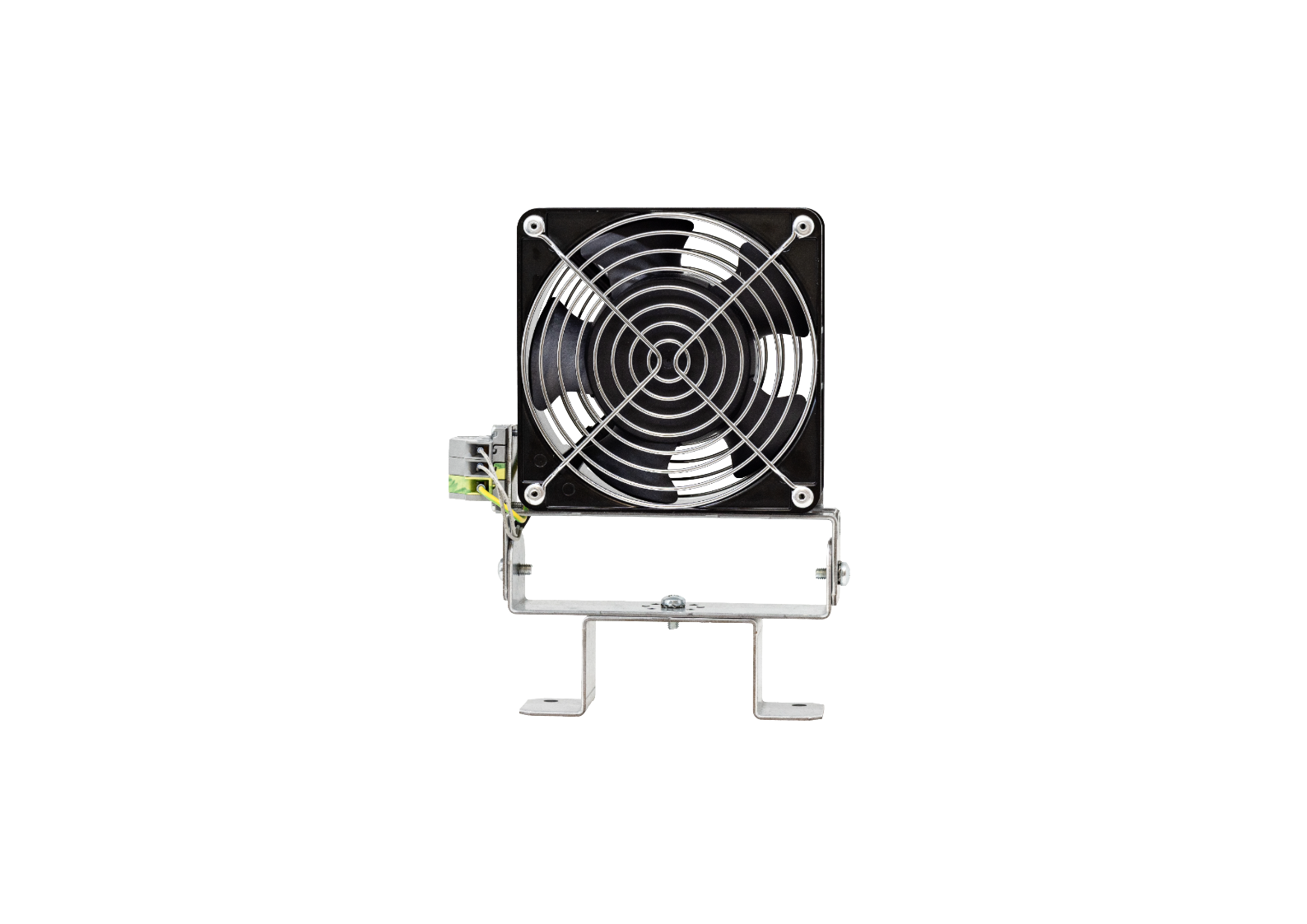
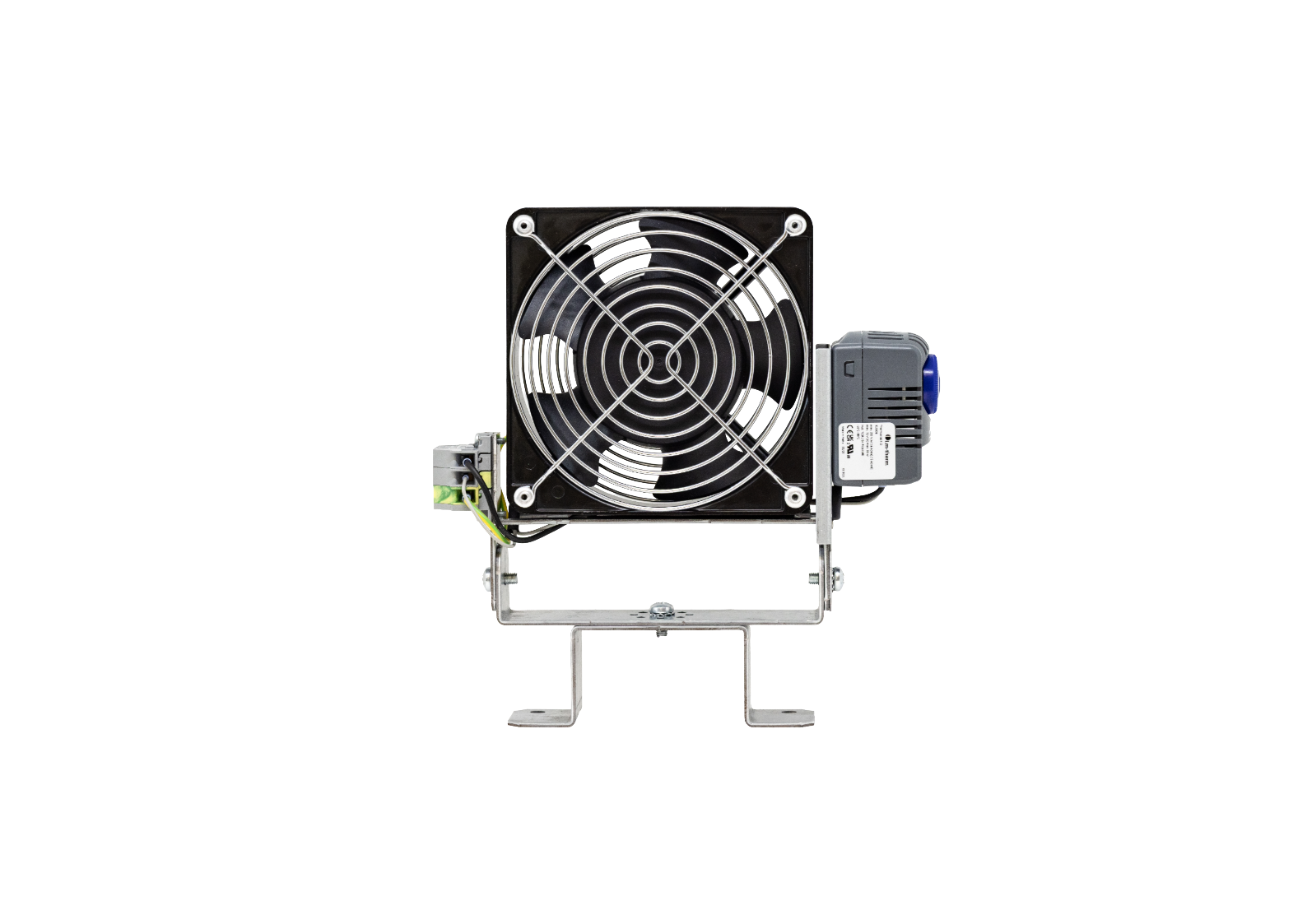
Frequently Asked Questions
What is a control cabinet internal fan?
A control cabinet internal fan is a fan designed to circulate air inside a control cabinet. It distributes the existing air evenly and prevents localized hot spots without drawing outside air into the control cabinet.
What is the difference between an internal fan and a filter fan?
An internal fan circulates air exclusively within the control cabinet. A filter fan, on the other hand, draws ambient air through a filter into the control cabinet and expels the heated air back outside. Internal fans are particularly suitable for improving air distribution, while filter fans ensure air exchange with the surrounding environment.
When is a control cabinet internal fan recommended?
An internal fan is recommended whenever significant temperature differences occur inside the control cabinet or when individual components generate significantly more heat than others. Uniform air circulation helps reduce hot spots and increase operational reliability.
What are the benefits of a control cabinet internal fan?
Control cabinet internal fans ensure even temperature distribution, reduce hot spots, and support existing cooling or heating systems. This allows electronic components to operate more efficiently and extends their service life.
Can an internal fan replace control cabinet cooling?
No. An internal fan does not generate cooling itself but rather circulates the existing air within the control cabinet. It complements cooling units or filter fans by enhancing their effectiveness and balancing temperature differences inside the enclosure.
How is a control cabinet internal fan installed?
Installation typically takes place directly on a mounting plate or a DIN rail inside the control cabinet. Depending on the model, the airflow can be directed specifically toward components that generate a lot of heat.
What should I consider when selecting an internal fan?
Important selection criteria include the size of the control cabinet, the power dissipation of the installed components, the required airflow rate, the operating voltage, and the installation situation. Proper sizing ensures optimal air circulation.
In which applications are control cabinet internal fans used?
Internal fans are used, among other things, in mechanical and plant engineering, automation technology, power distribution systems, and switching and control systems. They contribute to reliable temperature distribution, especially in densely populated control cabinets.
Do control cabinet internal fans require a lot of maintenance?
No. Since internal fans do not draw in outside air—and thus less dirt or dust enters the control cabinet—they generally require very little maintenance. A regular visual inspection and, if necessary, cleaning of the fan blades are usually sufficient.
Can control cabinet internal fans be used in continuous operation?
Yes. High-quality control cabinet internal fans are designed for continuous use in industrial applications and ensure reliable air circulation and even temperature distribution even during continuous operation.