Control cabinet heaters
PTC control cabinet heating – an efficient and safe solution for your control cabinet
Frost and moisture can significantly impair the functionality of electrical components. A PTC control cabinet heater reliably protects your electronics from these influences. Thanks to modern PTC (Positive Temperature Coefficient) technology, these heaters are characterized by high safety and energy efficiency. Unlike conventional resistance heaters, PTC heaters regulate themselves: as the temperature rises, the resistance of the heating element increases, automatically reducing power consumption. This prevents overheating and increases operational safety.
Advantages and disadvantages of PTC control cabinet heaters
Advantages:
- Self-regulating heating element: Automatic adjustment of power to the ambient temperature – additional switching elements for temperature limitation are unnecessary.
- High safety: Self-regulation minimizes the risk of overheating and fires.
- Fast heating: Small PTC control cabinet heaters quickly reach their operating temperature.
Disadvantages:
- High inrush current: Temporary increase in power consumption, which must be taken into account when selecting fuses.
PTC control cabinet heating vs. resistance heating
| Feature | PTC control cabinet heating | Resistance heating |
| Self-regulation | Yes, but controller recommended | No, but integrated thermostat |
| Energy efficiency | High | Lower |
| Safety | Very high (overheating protection) | Lower |
| Start-up current | High (short-term) | Lower |
Product selection and specifications
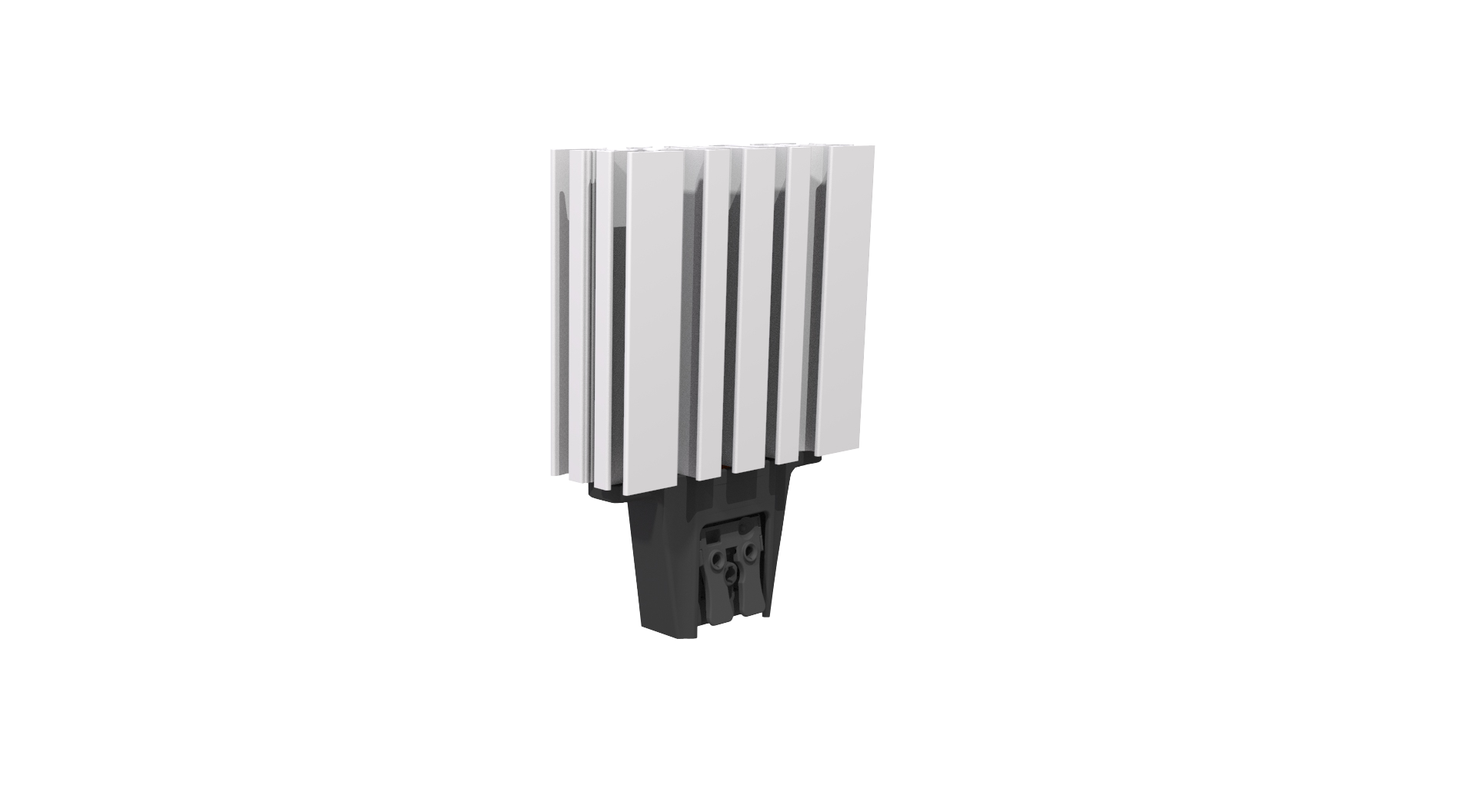
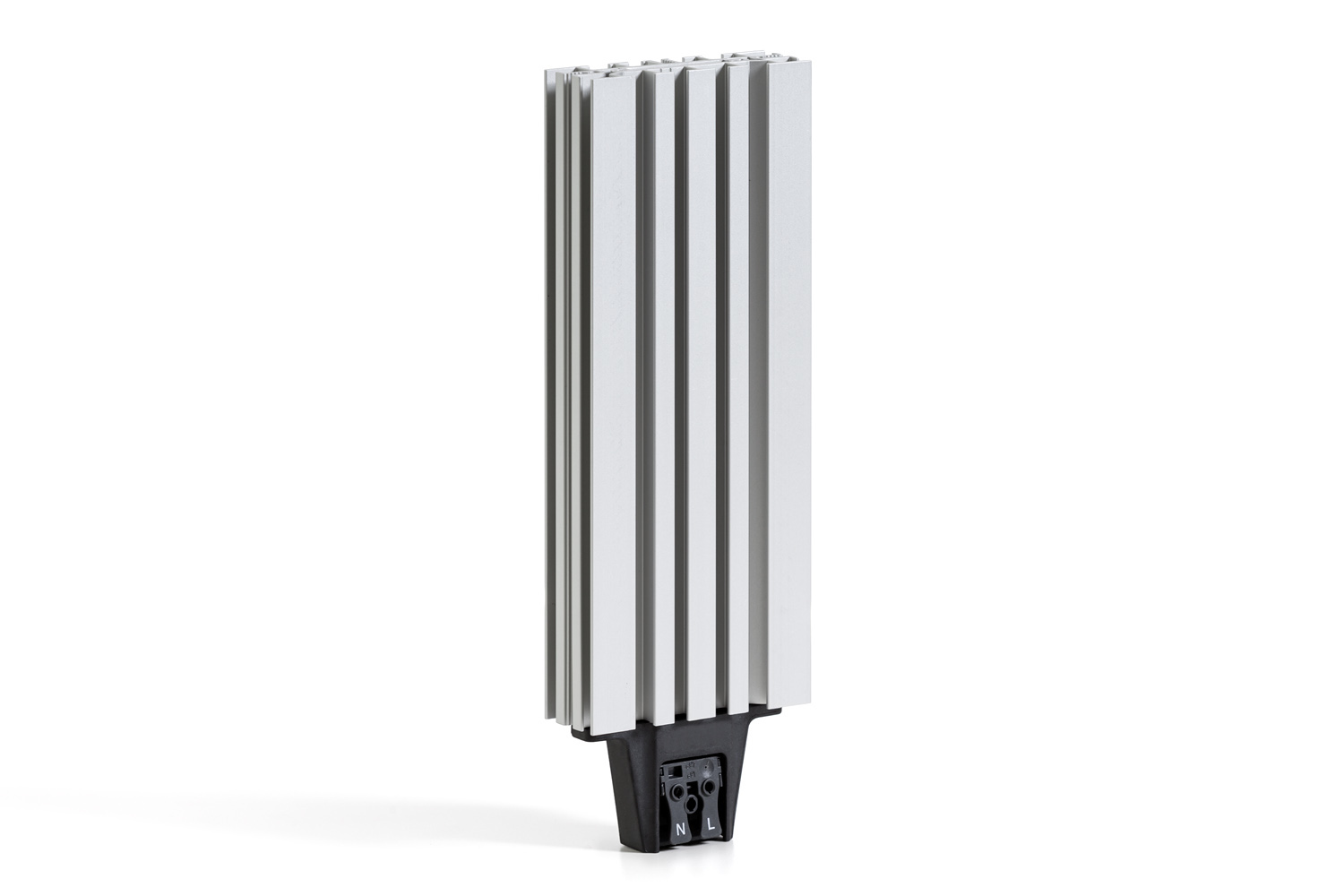
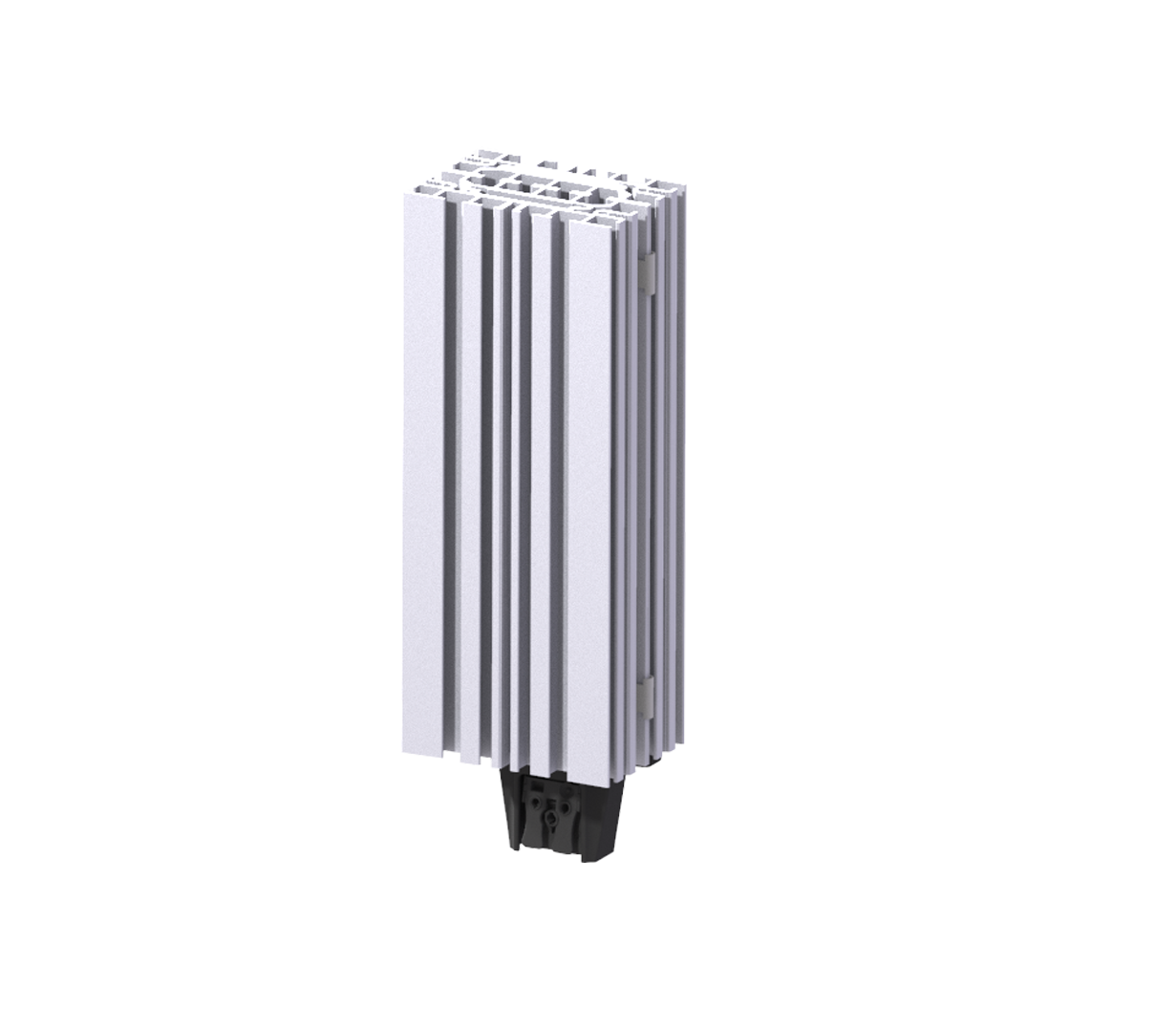
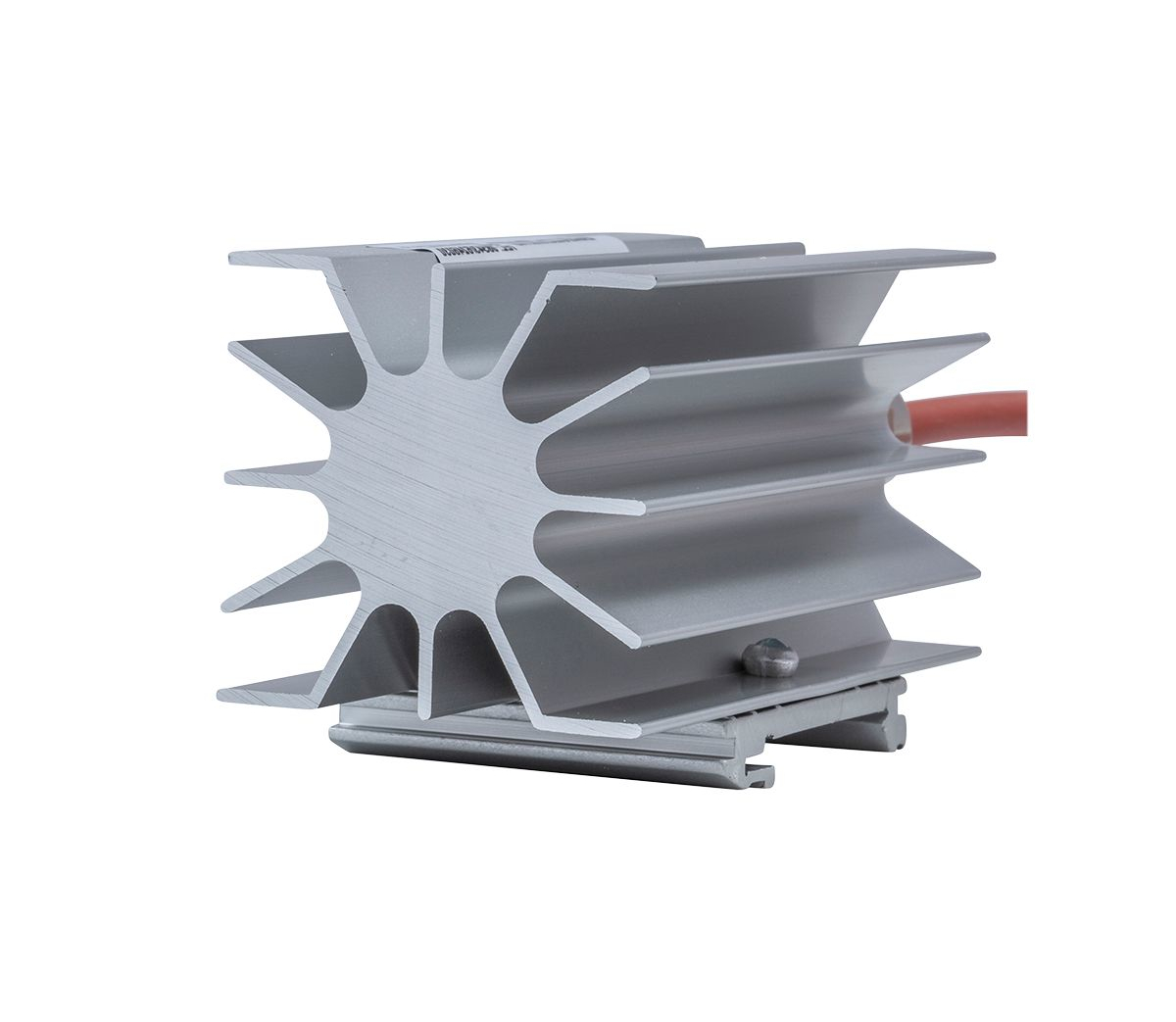
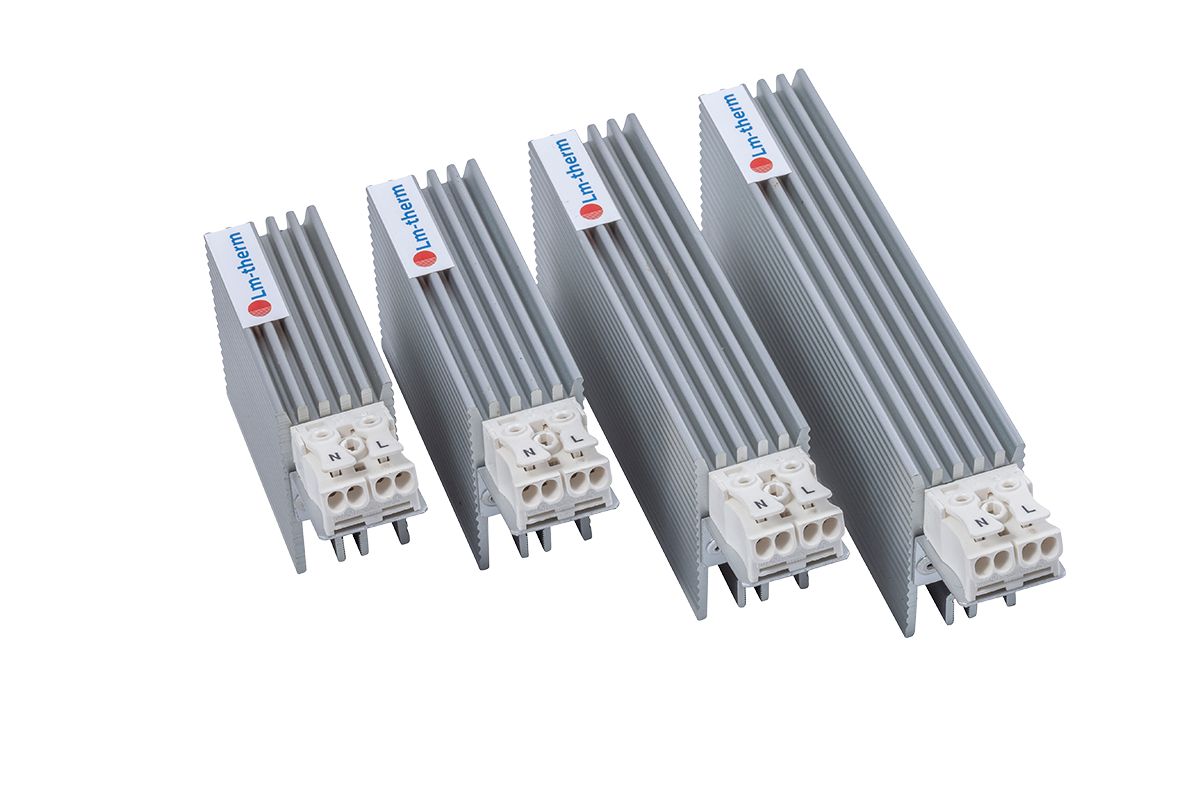
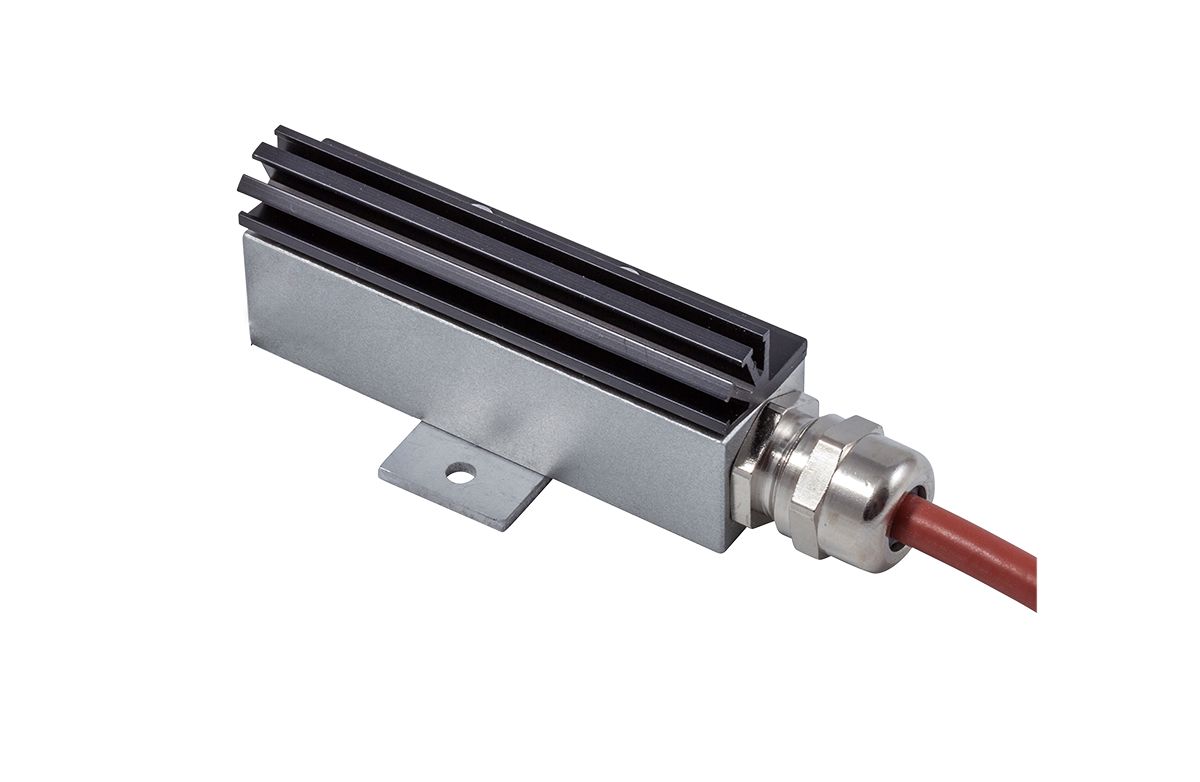
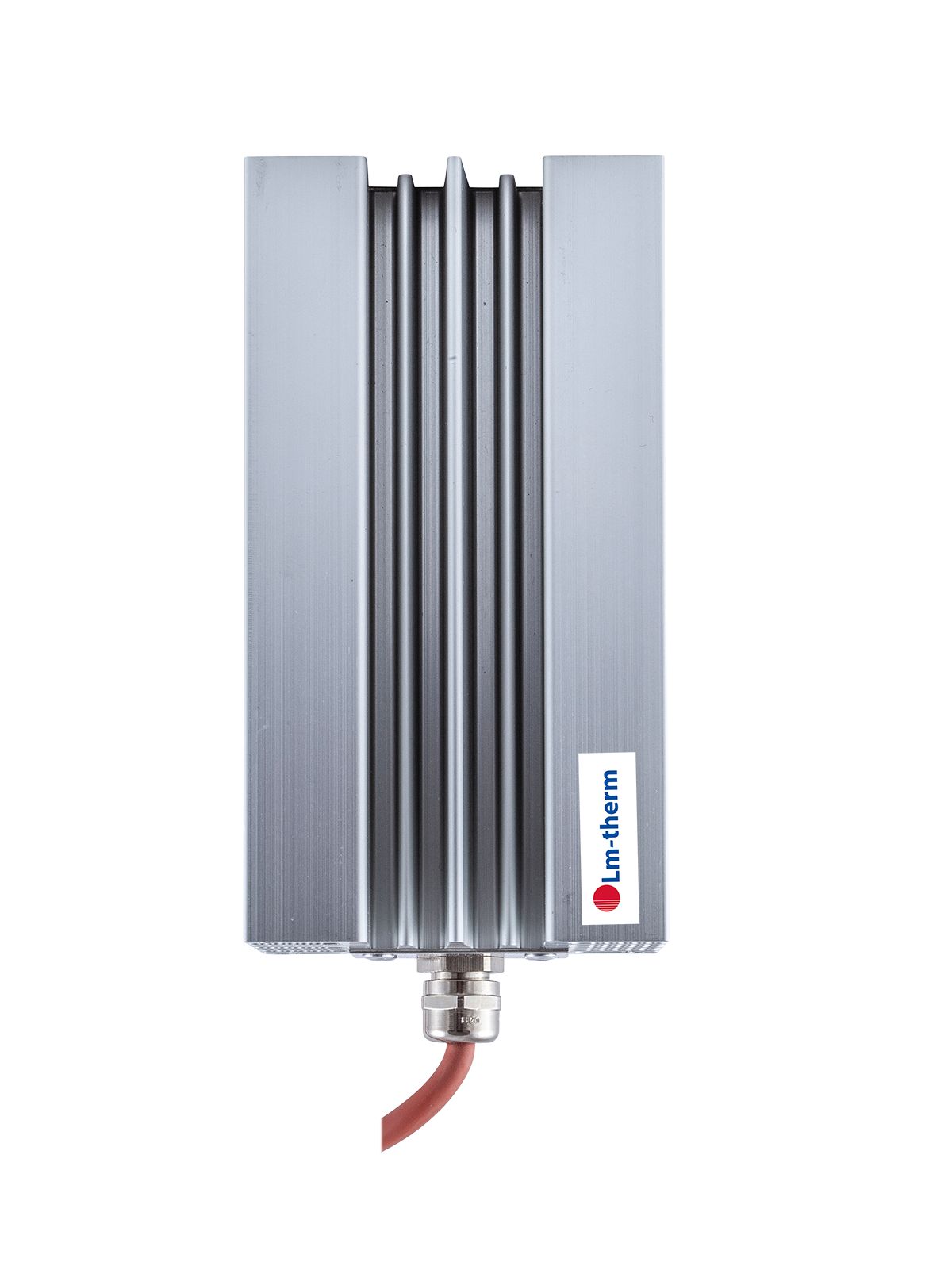
Our range includes compact PTC control cabinet heaters with outputs from 10 W to 240 W, which are ideal for various applications. The P70 series heaters are powerful solutions for heating air in enclosed electrical enclosures. Thanks to the chimney effect, the heater achieves up to 240 W of power without a fan.
Technical highlights:
- Thermal decoupling: Safe mounting on the top-hat rail.
- Easy installation: DIN clip and pressure terminals enable quick integration.
- Multi-voltage capable: Operation at 110–240 V AC/DC.
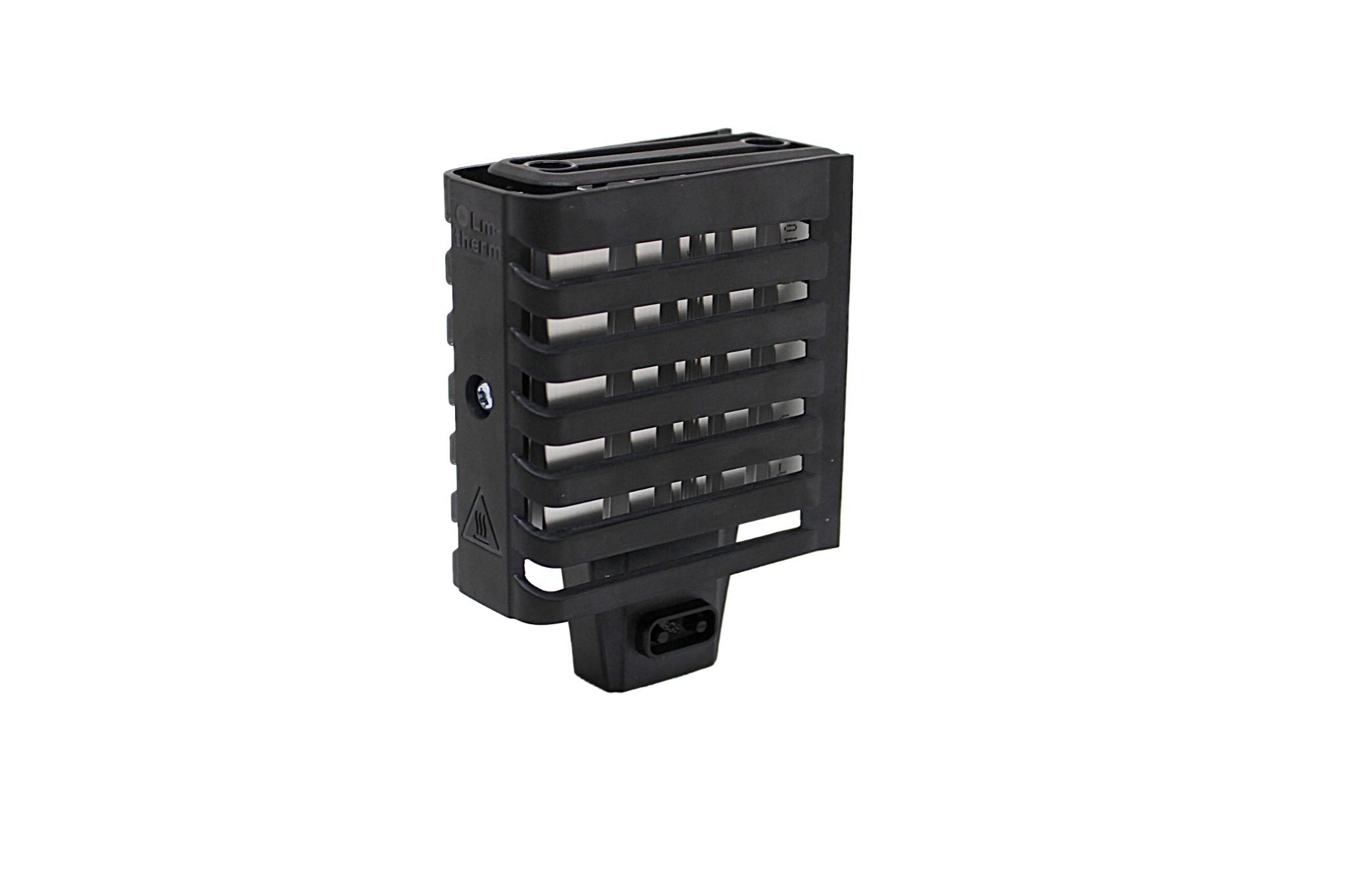
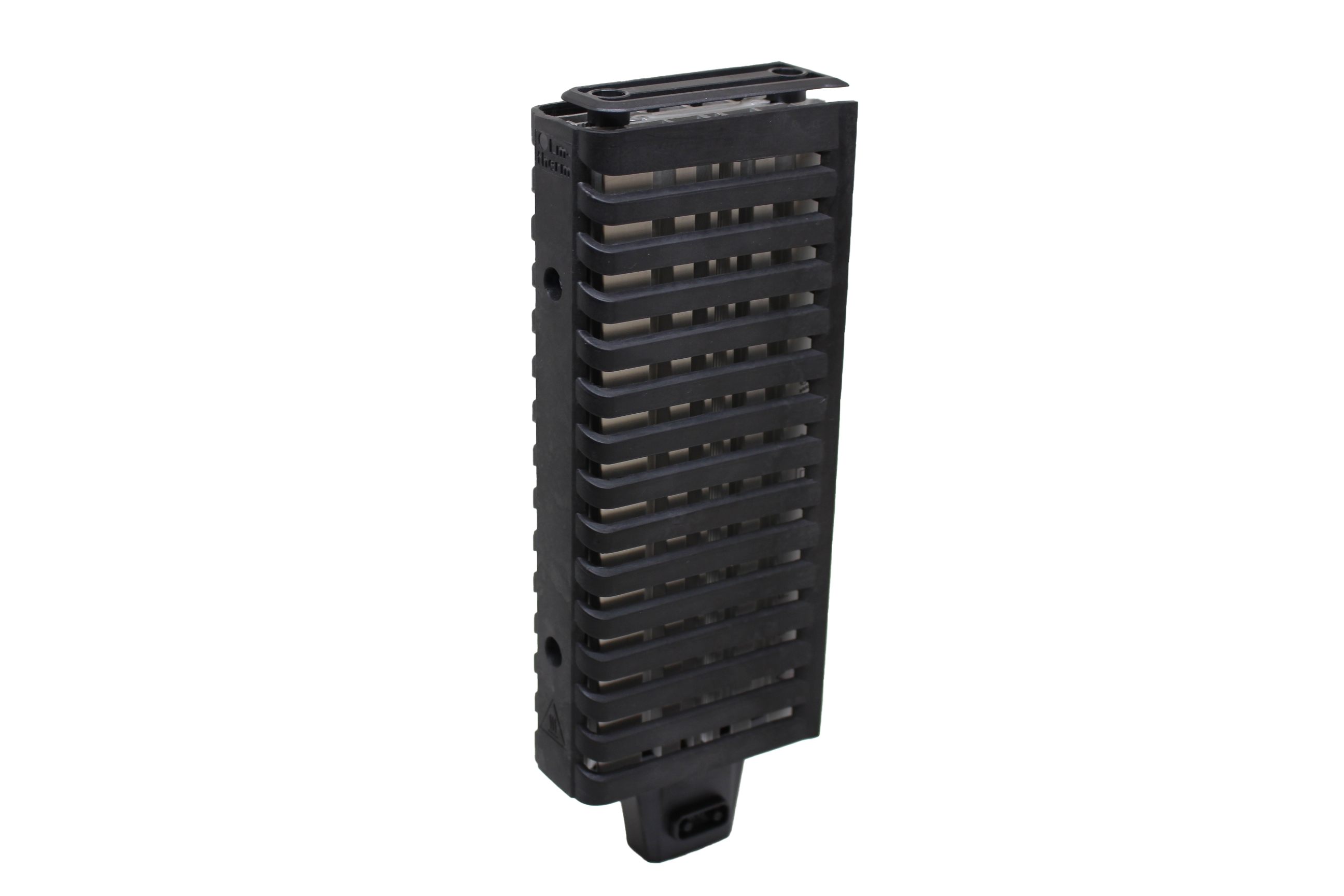
- Touch protection: Optional protection against high surface temperatures, easy to retrofit.
Whether as a heater for small enclosures or as a powerful solution for large control cabinets: With PTC control cabinet heaters from Lm-therm, you can rely on safety and efficiency.
Showing all 10 results
Frequently Asked Questions
What heating capacity do I need for a control cabinet heater?
The required heating capacity depends, among other things, on the control cabinet size, minimum ambient temperature, desired internal temperature, and heat gains/losses. In practice, the capacity is usually determined using design tools—we are happy to assist with the calculation.
When is a control cabinet heater recommended?
A control cabinet heater is recommended when components need to be protected from excessively low temperatures or when there is a risk of condensation. Typical applications include outdoor installations, unheated warehouses, or environments with significant temperature fluctuations.
How is a control cabinet heater controlled?
The heater is usually controlled by a thermostat that turns on when the temperature drops below a set point and turns off again when the target temperature is reached. This saves energy and keeps the temperature in the control cabinet stable.
Where should a control cabinet heater be installed in the cabinet?
It is common to install it in the lower section so that the warm air can rise and evenly distribute heat throughout the control cabinet. Sufficient air circulation and adequate distance from temperature-sensitive and temperature-affecting components are important.
What common mistakes should be avoided when using control cabinet heaters?
What common mistakes should be avoided when using control cabinet heaters? Common mistakes include insufficient heating capacity, improper placement that prevents air circulation, or the lack of a thermostat for temperature control. Incorrect fuse selection or wiring configuration can also lead to operational problems.